How State Excise Changes Are Quietly Reshaping India’s Liquor Market
Look how changing alcohol taxes in states like Maharashtra, Karnataka, and West Bengal are affecting prices, premium growth, beer versus spirits, and the future of India’s liquor market.
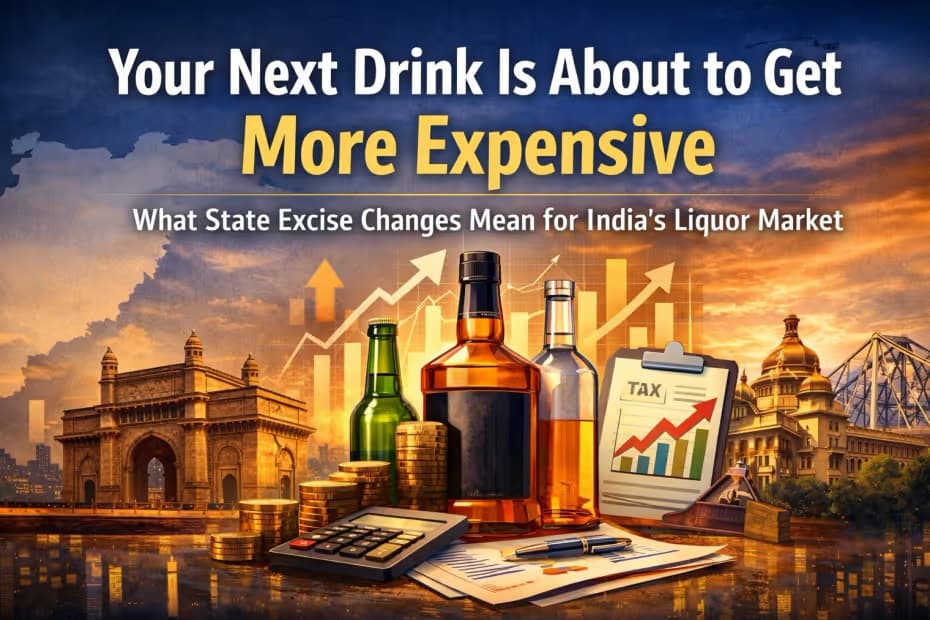
India does not really have one alcohol market. It has twenty-eight different ones. Every state decides how alcohol will be taxed, how it will be sold, how licenses will be given, and how prices will be controlled. Alcohol was kept outside GST, which means the central government does not set a uniform tax system for it. Instead, each state runs its own model, and that is why the same bottle can cost very different amounts depending on where you are standing.
Over the past few years, many of these states have quietly adjusted their excise structures. These are not dramatic headline reforms. There are technical changes in how duty is calculated, how retail prices are structured, or how alcohol strength is taxed. But even small technical changes can shift how profitable certain price segments are, which categories grow faster, and how consumers respond to rising prices.
Maharashtra and the Pressure on the Middle
Take Maharashtra as an example. The state revised the way it calculates duty in relation to MRP, and the result is that mid-priced bottles feel more pressure than before. If you are selling a bottle around the ₹1,000 mark, your margins may feel tighter than they used to.
Very premium bottles, however, sometimes experience relatively less proportional pressure because the structure allows more headroom at higher price bands. Over time, this pushes brands to focus more on premium products because the middle of the market becomes harder to operate in.
Karnataka and the Shift Toward Alcohol Strength
Karnataka has taken a slightly different route by leaning more toward taxing based on alcohol strength. That means drinks with lower alcohol content, like beer, are treated differently from higher-strength spirits.
A 5 percent beer does not carry the same alcohol load as a strong whisky, and when tax structures begin to reflect that difference more clearly, beer can become relatively more attractive in price comparison. This does not mean spirits disappear, but it does slowly change how categories compete with each other on shelves.
West Bengal and Retail Reform
West Bengal, meanwhile, has focused more on retail structure and access rather than simply raising taxes. By adjusting how certain categories are sold and improving market access for IMFL, the state has created room for volume growth in segments that were previously less organised. In this case, the shift is less about squeezing margins and more about expanding opportunity.
Premium Growth Comes With Tax Complications
While all this is happening, the premium segment in India continues to grow. Urban consumers are increasingly willing to spend more on Indian single malts, imported Scotch, craft gin, and other higher-end products. But there is an interesting tension here. In many states, tax increases automatically when the price of the bottle increases.
So when a consumer upgrades from an ₹800 whisky to a ₹2,200 whisky, the tax portion also jumps significantly. That reduces the extra profit brands might expect from premium trading. Some states are experimenting with mixed approaches that soften this jump, but the broader picture remains uneven.
Beer and RTDs in a Strength-Based System
Beer and ready-to-drink beverages sit in a slightly different position. Because they usually contain lower alcohol by volume, strength-based taxation tends to treat them more gently. If more states adopt alcohol-content-based systems, beer and RTDs could quietly gain structural support without loud policy announcements. These categories are already growing in urban markets, and tax design could accelerate that shift.
Distribution Feels the Impact Too
The pressure does not stop at brands. Distributors also feel the impact when excise structures change. When duties increase, retail prices rise, but distributor margins do not always rise in the same proportion.
At the same time, inventory becomes more expensive to hold, working capital requirements increase, and compliance costs remain steady. Larger distribution companies can manage this complexity more comfortably than smaller regional operators, which is one reason consolidation trends appear in certain markets over time.
Market Dividing Into Two Segments
Consumers are also responding differently depending on where they sit in the income spectrum. Budget consumers tend to react quickly to price increases, either by reducing consumption or by shifting to lower-priced alternatives.
Premium consumers often behave differently because their purchase decision includes lifestyle, brand value, and experience. This creates a visible split in the market where economy and premium segments grow, while the traditional mid-tier faces pressure from both sides.
What This Means Going Forward
Looking ahead, India is unlikely to move toward one unified alcohol taxation system. States rely too heavily on excise revenue to give up control easily. What we are more likely to see is continued divergence, where some states experiment with strength-based models, others focus on revenue maximisation, and a few try retail reforms to unlock growth.
The common thread is that excise policy is no longer just an administrative detail buried in government notifications. It directly shapes pricing strategy, portfolio design, distribution economics, and investor expectations.