Bihar Liquor Ban 2025: What’s Happening Now and Why Everyone’s Talking About It
Bihar’s liquor ban, in force since 2016, remains one of India’s most debated policies. Here’s a simple breakdown of the latest updates, surveys, political reactions, and what might happen next in 2025.
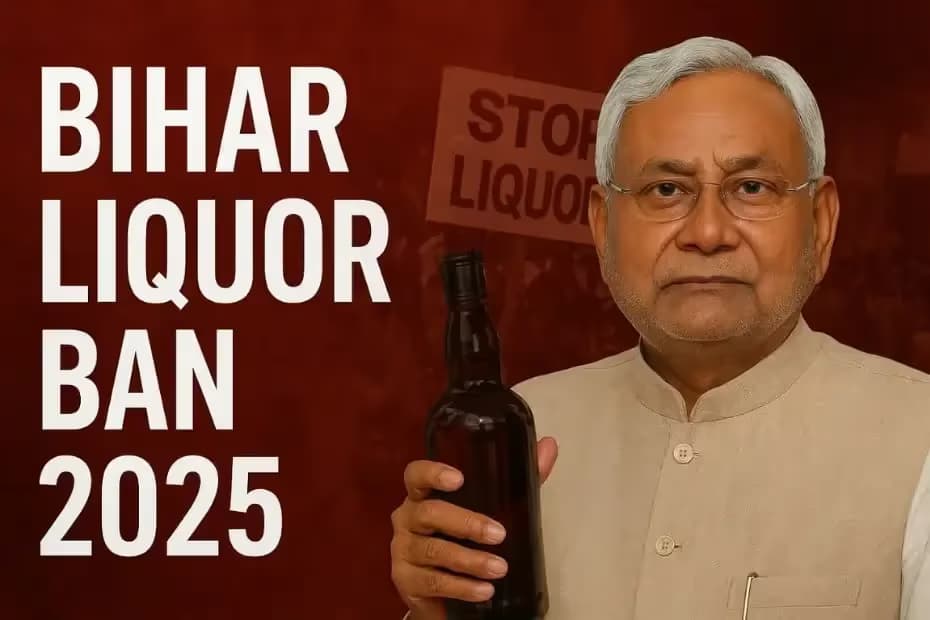
Bihar’s liquor prohibition policy, launched in April 2016 and continues to stir conversation across the state. Now in its ninth year, it remains one of the most ambitious social reforms in India. As Bihar heads toward elections, new surveys, fresh data, and statements from political leaders have put the ban back in the spotlight.
Chief Minister Nitish Kumar says the policy has improved social well-being, while critics argue it’s time to rethink it. The debate over the Bihar liquor ban 2025 is more intense than ever.
How It All Began
The complete ban on alcohol was announced by Nitish Kumar at a women’s event and implemented on April 5, 2016. The aim was to protect families, reduce domestic violence, and promote a healthier society.
Since then, the government has conducted two major surveys on its impact and is preparing a third survey before the upcoming elections — possibly to assess whether the law should be relaxed, modified, or continued.
Liquor Ban Statistics: What the Numbers Show
Enforcement has been extensive since the ban began:
- Over 12 lakh arrests have been made under the prohibition law
- 8.5 lakh cases registered
- 5.2 lakh people convicted by courts
- 1.2 lakh vehicles seized
- Around ₹327 crore was earned by auctioning seized vehicles
These figures come from Bihar’s excise department and police records, showing how serious the government remains about the ban.
Nitish Kumar’s Stand vs. Opposition Views
Chief Minister Nitish Kumar remains firm on the prohibition, calling it a pro-women and family-oriented policy. He claims it has helped curb alcohol abuse and improve domestic peace.
But the opposition sees things differently:
- Prashant Kishor’s Jan Suraj Party says it would allow legal liquor sales if voted into power, pointing to increased smuggling and loss of revenue to neighboring states.
- Former Union Minister R.K. Singh has also urged for the ban’s removal, saying it’s led to black market growth and an overloaded court system.
Ground Reality and Law Enforcement
Police continue to seize illegal liquor across Bihar almost daily. However, the number of undertrial prisoners in prohibition-related cases has skyrocketed since 2016.
While crimes under the Prohibition Act have gone up, other crimes, especially against women, have slightly decreased or remained steady. This suggests that while the ban may have reduced domestic violence, it also created a surge in prohibition-specific offenses.
Economic Fallout of the Bihar Liquor Ban
Before the ban, Bihar earned significant excise revenue from alcohol sales. After 2016, that revenue dropped to almost zero.
Meanwhile, neighboring states like Jharkhand, Uttar Pradesh, and West Bengal saw their liquor revenues soar, suggesting a rise in smuggling and alcohol purchases from across the border. Economists call this a major revenue leakage for Bihar.
Public Sentiment: Divided Opinions
Public opinion in Bihar remains split.
- Supporters are mainly women and social activists, and they say prohibition has reduced domestic violence, improved savings, and benefited families.
- Critics argue that it’s hurt the poor, who face legal action for minor offenses, while illegal liquor networks thrive.
Data from the National Family Health Survey supports the idea that alcohol consumption increases domestic violence — but experts say prohibition alone can’t solve the issue without better enforcement and awareness.
What’s Next for Bihar’s Prohibition Policy
As the 2025 Bihar elections approach, the state’s liquor ban has once again become a key campaign issue. The third government survey, expected soon, will play a crucial role in shaping what happens next, whether the government decides to tighten, modify, or repeal the ban.
Whatever direction it takes, Bihar’s liquor prohibition will remain one of India’s most watched social and political experiments.
Key Takeaways
- Bihar’s liquor ban started in 2016 under CM Nitish Kumar.
- Over 12 lakh arrests have been made under the prohibition laws.
- Third major survey on the policy coming before the 2025 elections.
- Opposition parties propose lifting or relaxing the ban.
- Debate continues over its social benefits vs economic drawbacks.
Final Verdict
The Bihar liquor ban 2025 debate is about much more than alcohol; it’s about social change, political identity, and how far a state can go to enforce morality through law. As new data and public opinion emerge, the story of Bihar’s prohibition policy is still being written.