Types of Liqueurs: A Complete Guide to Their History, Origin, and Different Styles
Discover the history and origin of liqueurs, explore the different types of liqueurs, how they're made, popular brands, and how to enjoy them in this complete beginner's guide.
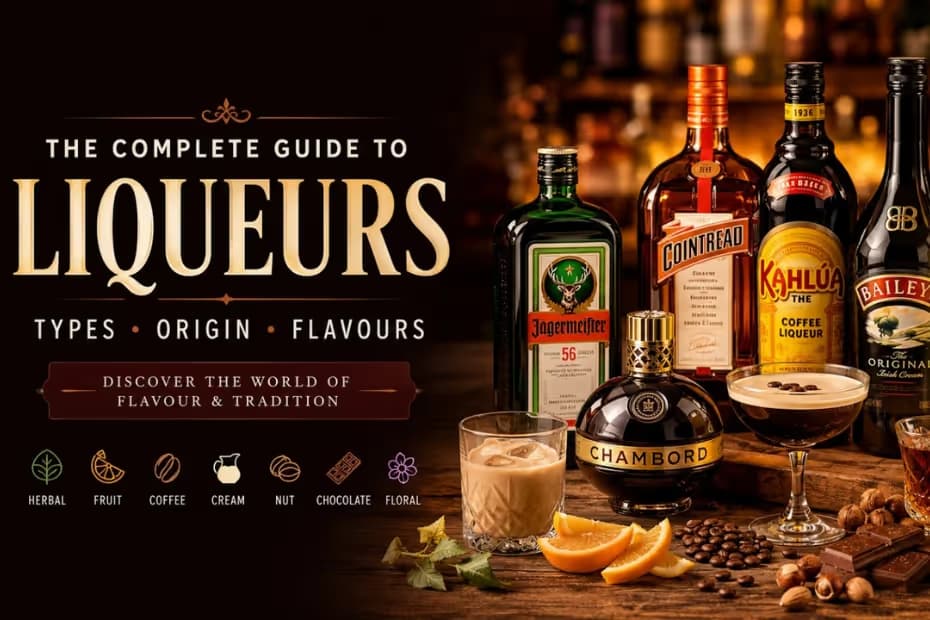
Liqueurs are among the most diverse and flavourful alcoholic beverages in the world. Unlike whisky, vodka, rum, or gin, which are primarily appreciated for the characteristics of the distilled spirit itself, liqueurs are created to showcase flavour. They can be herbal, fruity, creamy, chocolaty, spicy, nutty, floral, or coffee-based, making them an essential part of cocktail culture and after-dinner drinks.
Today, there are hundreds of liqueurs produced across the world, each reflecting the ingredients, traditions, and culinary heritage of its region. Whether it's the herbal complexity of Jägermeister, the rich coffee notes of Kahlúa, or the creamy sweetness of Baileys, every bottle has its own story.
In this guide, we'll explore where liqueurs originated, how they evolved, the different types available today, and how to choose one based on your taste.
What Is a Liqueur?
A liqueur is an alcoholic beverage made by flavouring a distilled spirit with ingredients such as herbs, fruits, spices, flowers, coffee, chocolate, nuts, or cream. Sugar or another sweetener is almost always added, giving liqueurs their signature smooth and approachable character.
Unlike base spirits, which focus on the flavour of the distillate itself, liqueurs are designed to highlight added ingredients.
Most liqueurs contain between 15% and 35% ABV, although some traditional herbal liqueurs can be stronger.
The Origin Story of Liqueurs
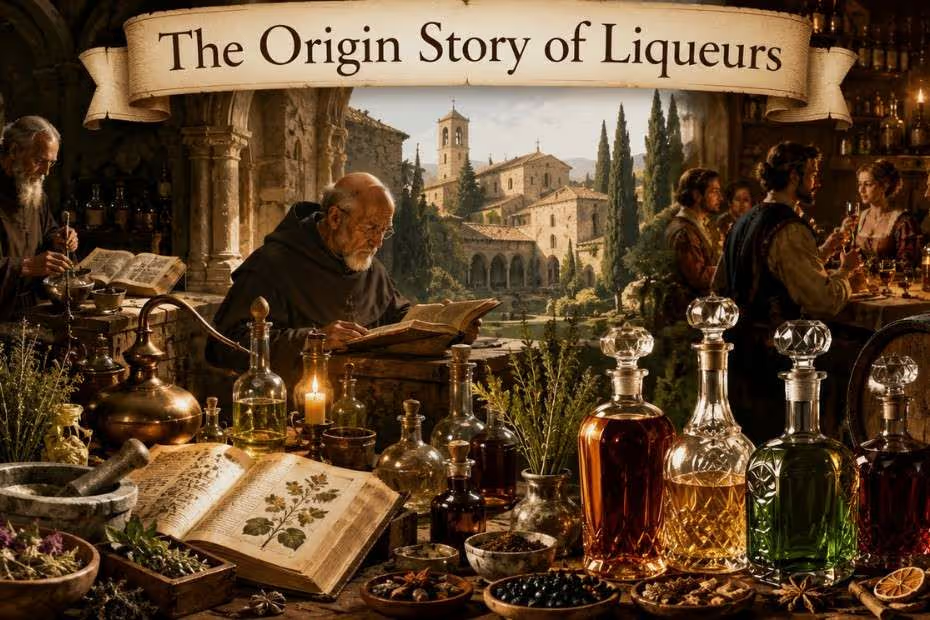
The history of liqueurs stretches back more than a thousand years.
The Beginning: Medicine Before Pleasure
The earliest liqueurs were never intended for parties or cocktails. During the Middle Ages, monks, apothecaries, and herbalists across Europe experimented with alcohol as a way to preserve medicinal herbs and botanicals.
Alcohol proved to be an excellent solvent for extracting flavours, aromas, and essential oils from plants. These herbal infusions were believed to help digestion, improve circulation, treat illnesses, and boost overall health.
Many of today's famous liqueurs still trace their roots to these medicinal recipes.
Monasteries Shaped the Category
Between the 12th and 17th centuries, monasteries in France, Italy, Germany, and other parts of Europe became centres of botanical knowledge.
Monks cultivated herb gardens, collected spices from traders, and developed complex recipes using dozens of ingredients. Some of these recipes remain closely guarded secrets even today.
For example:
- Chartreuse is still produced by Carthusian monks using a recipe said to contain more than 130 botanicals.
- Bénédictine claims inspiration from recipes created by Benedictine monks.
Many herbal digestifs across Europe evolved from monastery traditions.
These drinks gradually shifted from medicinal remedies to enjoyable beverages served after meals.
How Liqueurs Became Popular
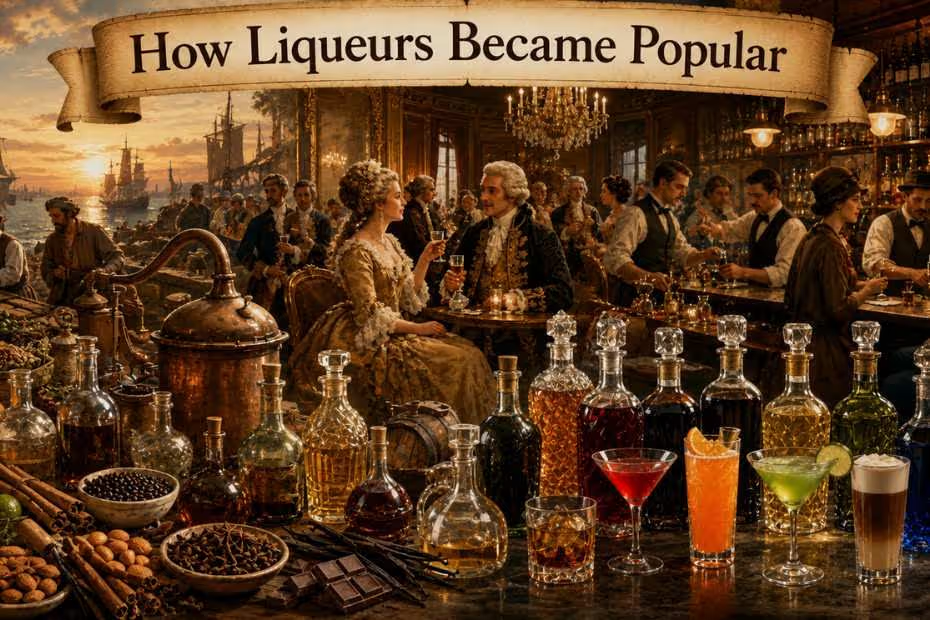
By the 17th and 18th centuries, global trade introduced new ingredients such as vanilla, cacao, citrus fruits, coffee, cinnamon, cloves, almonds, and tropical spices.
Distillers began experimenting beyond medicinal herbs, creating sweeter and more enjoyable drinks.
As sugar became more affordable, liqueurs transformed into luxury products enjoyed by royalty, aristocrats, and wealthy merchants before eventually becoming accessible to a wider audience.
During the late 1800s and early 1900s, the growth of cocktail culture made liqueurs indispensable behind the bar. Bartenders relied on them to add sweetness, complexity, colour, and aroma to classic cocktails.
Today, liqueurs remain one of the largest and most diverse categories in the global alcohol industry.
Types of Liqueurs
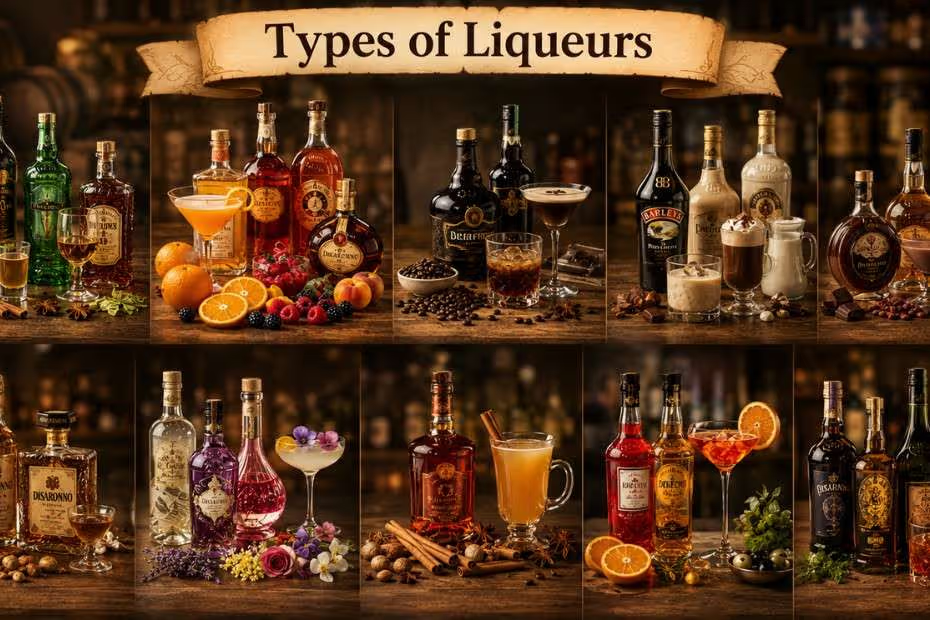
Although hundreds of individual products exist, most liqueurs fall into several major categories.
1. Herbal Liqueurs
Herbal liqueurs are made by infusing herbs, roots, bark, flowers, seeds, and spices into a distilled spirit.
They are often complex, aromatic, and slightly bitter, making them popular as digestifs or cocktail ingredients.
Common Flavours
- Herbs
- Mint
- Cinnamon
- Clove
- Cardamom
- Citrus peel
- Anise
- Ginger
Popular Brands
- Jägermeister
- Chartreuse
- Bénédictine
- Strega
- Drambuie
Best For
- Neat after meals
- Cocktails
- Chilled shots
- Winter drinks
2. Fruit Liqueurs
Fruit liqueurs capture the natural sweetness and aroma of fresh fruits.
They are among the most versatile cocktail ingredients and are produced using citrus, berries, tropical fruits, stone fruits, and orchard fruits.
Common Flavours
- Orange
- Lemon
- Peach
- Raspberry
- Cherry
- Apple
- Mango
- Passion Fruit
- Blackcurrant
Popular Brands
- Cointreau
- Grand Marnier
- Chambord
- De Kuyper
- Limoncello
Best For
- Margaritas
- Cosmopolitans
- Spritzes
- Dessert cocktails
3. Coffee Liqueurs
Coffee liqueurs combine roasted coffee beans with sugar and spirits to produce deep, rich flavours.
They have become essential ingredients in modern cocktail culture.
Common Flavours
- Espresso
- Dark chocolate
- Vanilla
- Caramel
- Roasted coffee
Popular Brands
- Kahlúa
- Tia Maria
- Mr Black
Best For
- Espresso Martini
- White Russian
- Coffee-based desserts
- After-dinner drinks
4. Cream Liqueurs
Cream liqueurs blend dairy cream with whisky or another spirit to create a rich, velvety drink.
They are smooth, dessert-like, and approachable for many beginners.
Common Flavours
- Vanilla
- Chocolate
- Coffee
- Irish cream
- Caramel
Popular Brands
- Baileys
- Amarula
- Carolans
- Five Farms
Best For
- Over ice
- Coffee
- Desserts
- Milk-based cocktails
5. Chocolate Liqueurs
Chocolate liqueurs combine cocoa with distilled spirits to create sweet dessert beverages.
Some focus on milk chocolate, while others highlight dark chocolate or cocoa nibs.
Popular Brands
- Mozart Chocolate Liqueur
- Godiva Chocolate Liqueur
Best For
- Dessert cocktails
- Baking
- Hot chocolate
6. Nut Liqueurs
Nut liqueurs use almonds, hazelnuts, walnuts, pistachios, or other nuts to create rich, toasted flavours.
Popular Brands
- Frangelico
- Amaretto Disaronno
- Nocello
Best For
- Coffee
- Dessert cocktails
- Neat after dinner
7. Floral Liqueurs
Floral liqueurs highlight delicate flower aromas and are commonly used in premium cocktails.
Common Ingredients
- Elderflower
- Rose
- Violet
- Lavender
- Jasmine
Popular Brands
- St-Germain
- Giffard Violette
- Parfait Amour
Best For
- Gin cocktails
- Champagne cocktails
- Summer drinks
8. Spice Liqueurs
These showcase warming spices instead of herbs.
Common Ingredients
- Cinnamon
- Clove
- Nutmeg
- Vanilla
- Allspice
Popular Uses
- Holiday cocktails
- Hot toddies
- Winter serves
9. Botanical & Bitter Liqueurs
These balance sweetness with bitterness and are commonly enjoyed before or after meals.
Many are considered aperitifs or digestifs depending on their style.
Examples include Italian bitters and aperitivo-style liqueurs.
How Liqueurs Are Made
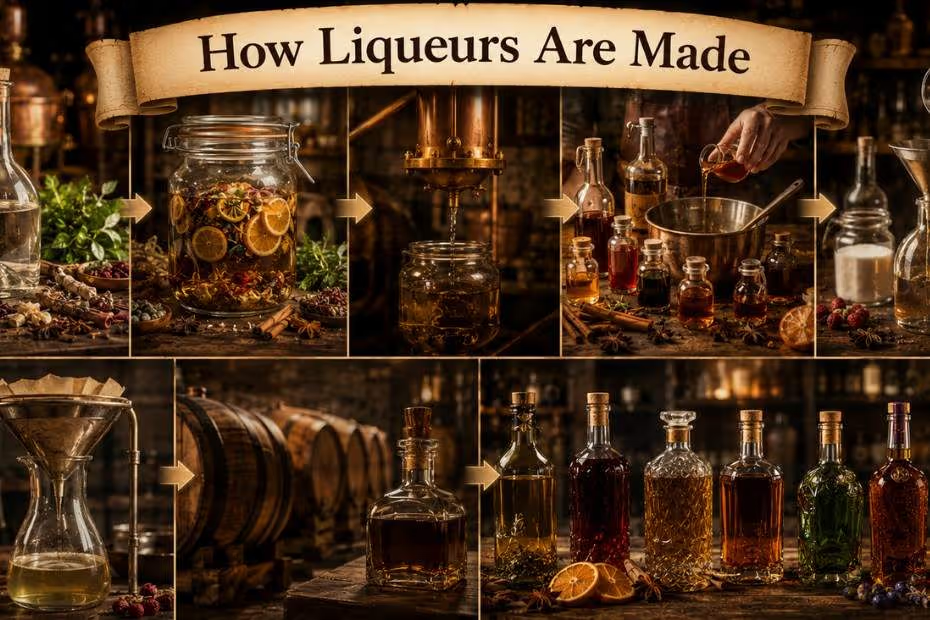
Most producers follow a similar process:
- Select a base spirit.
- Extract flavours through maceration, infusion, or distillation.
- Blend ingredients.
- Add sugar or sweeteners.
- Filter and sometimes age the liquid.
- Bottle and package.
The exact recipes are often closely guarded family or company secrets.
Liqueurs Around the World
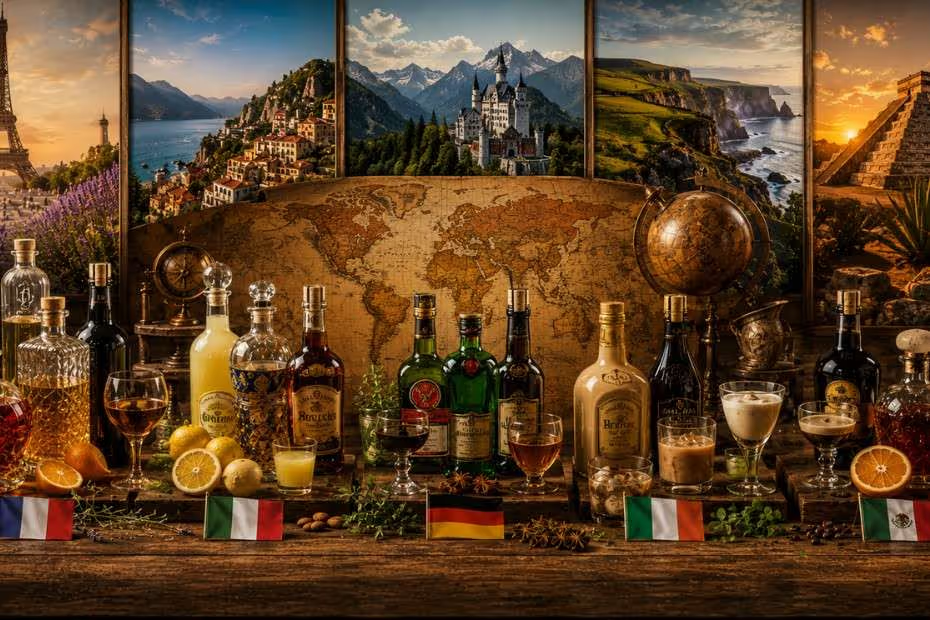
Different countries have developed their own signature styles.
France is known for herbal, orange, and floral liqueurs.
Italy produces limoncello, amaretto, sambuca, and many aperitifs.
Germany is famous for herbal digestifs.
Ireland popularised cream liqueurs.
Mexico is known for coffee liqueurs and citrus-based styles.
How to Choose a Liqueur
Your choice depends on how you plan to enjoy it.
- If you enjoy herbal flavours, try herbal liqueurs.
- If you love coffee, explore coffee liqueurs.
- For desserts, cream and chocolate liqueurs are excellent options.
- For cocktails, fruit liqueurs offer the greatest versatility.
- If you enjoy nutty flavours, hazelnut or almond liqueurs are a great place to start.
Frequently Asked Questions
Are liqueurs the same as spirits?
No. Spirits are distilled alcoholic beverages such as whisky, gin, rum, vodka, and tequila. Liqueurs are made by flavouring a spirit with ingredients like herbs, fruits, coffee, chocolate, or cream and usually contain added sugar.
Why are liqueurs sweeter?
Most liqueurs contain added sugar, honey, or another sweetener to balance the infused flavours and create a smoother drinking experience.
Can liqueurs be enjoyed neat?
Yes. Many liqueurs are designed to be sipped neat, over ice, or after meals. Others are primarily used in cocktails.
Which liqueur is best for beginners?
Cream, coffee, and fruit liqueurs are often considered the easiest entry point because of their sweeter, smoother flavours.
Final Thoughts
Liqueurs have come a long way from their origins in medieval monasteries and herbal medicine. Today, they represent one of the most creative categories in the drinks industry, offering flavours that range from bright citrus and fresh berries to rich coffee, dark chocolate, fragrant herbs, and delicate flowers.
Whether you're building a home bar, learning about cocktails, or simply curious about different styles of alcohol, understanding liqueurs opens the door to a fascinating world of flavour and tradition.
Drink responsibly. Alcohol is intended for adults of legal drinking age (18+ in India where legally permitted). Enjoy in moderation.