Bihar Liquor Ban 2025: Why Many Believe Prohibition Should Continue
Explore how Bihar’s liquor ban changed family lives, reduced domestic violence, and improved women’s safety, creating a stronger social and financial foundation across the state.
When Bihar imposed a complete liquor ban in 2016, it wasn’t just another government decision, it was a bold social experiment. Nine years later, the debate still continues in homes, tea stalls, and political discussions across the state.
Chief Minister Nitish Kumar continues to defend the ban, calling it one of Bihar’s biggest social reforms. While critics highlight revenue loss and illegal trade, supporters say the policy has changed lives and brought peace to families.
How It All Began
The Bihar Prohibition and Excise Act of 2016 banned the manufacture, sale, transport, and consumption of liquor. The policy was rooted in Article 47 of the Indian Constitution, which encourages states to work toward public health and welfare.
At first, many doubted its success. But for thousands of rural women, it became a blessing. Before prohibition, alcohol abuse led to domestic violence, debts, and family disputes. The ban gave them hope for a peaceful life.
In the early days, reactions were mixed. Some praised Nitish Kumar’s courage, while others worried about losing revenue. Yet, even today, many women still say it changed their lives for the better.
The Social Change It Sparked
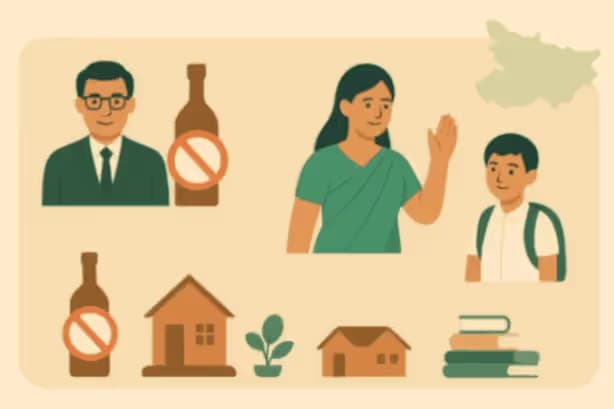
The most visible effect of the liquor ban has been the improvement in family and social life. Many women say they now feel safer, and domestic violence has dropped. Families are saving more money, which is being spent on education and food.
Interviews from districts like Nalanda, Gaya, and Purnea show a clear pattern, household finances have improved and children’s education is now a priority. Nitish Kumar calls this the true success of prohibition: a social transformation that strengthens families and restores dignity.
According to surveys, school attendance and savings have both gone up since 2016. The link is clear, when addiction goes down, progress rises.
Conclusion
The liquor ban in Bihar became more than a policy, it turned into a movement for social change. Despite challenges, it helped many families regain stability, safety, and dignity. Women found empowerment, children gained better opportunities, and communities experienced peace. Even after nine years, the reform continues to shape Bihar’s journey toward a healthier and more balanced society.
FAQs
1. When was the liquor ban implemented in Bihar?
The Bihar Prohibition and Excise Act was introduced in 2016.
2. Why was the liquor ban needed?
It aimed to reduce domestic violence, addiction, and financial stress among families.
3. How did women benefit from the ban?
Women reported safer homes, better family savings, and more respect.
4. Did everyone support the ban initially?
No, reactions were mixed at first, but many now support it due to visible changes.
5. How did the ban affect children’s education?
With less alcohol spending, families could invest more in schooling.