Diageo and Liquor Stocks Fall in India After Tariff Increase on Scotch Whisky Imports
Diageo and liquor stocks fall after India imposes a 16.25% duty and tax on bulk Scotch whisky imports.
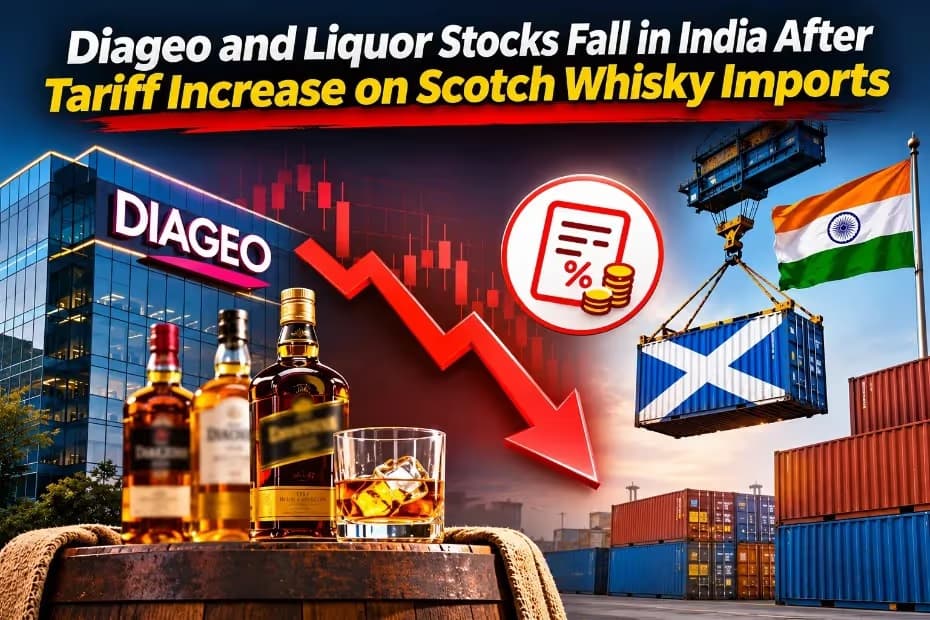
Diageo and several other liquor companies have witnessed a decline in their share prices following the introduction of a higher tariff on Scotch whisky imports into India. The Indian government has imposed a duty and tax of 16.25% on bulk Scotch whisky, raising concerns among investors and industry players about its possible impact on the liquor market.
The development comes amid ongoing trade discussions between India and the United Kingdom (UK). The increase in import duties has created uncertainty for companies operating in India's premium liquor segment, particularly those with a strong presence in the Scotch whisky market.
Why Are Diageo and Other Liquor Stocks Falling?
The recent decline in liquor stocks is linked to the increased duty on bulk Scotch whisky imports. The new tariff has raised concerns about higher import costs, which could affect the pricing, sales and profitability of companies dealing in imported alcoholic beverages.
Diageo, one of the major players in the global alcoholic beverages industry, has also seen its share price come under pressure following the announcement. Several other liquor companies have experienced similar declines, reflecting broader concerns across the sector.
Investors are closely watching how the tariff changes could affect businesses that depend on Scotch whisky imports and sales in India.
How Will the 16.25% Tariff Affect the Indian Liquor Industry?
Scotch whisky has gained popularity among Indian consumers, particularly in the premium alcoholic beverages segment. India has witnessed increasing demand for imported whisky in recent years, making it an important market for international liquor brands.
The additional 16.25% duty and tax on bulk Scotch whisky could increase the cost of importing the product. Depending on how companies manage these additional costs, the change could affect product prices, consumer demand and profit margins.
Industry stakeholders are concerned that higher costs may put pressure on sales, especially in the premium segment, where imported Scotch whisky has a strong customer base.
India-UK Trade Discussions Behind the Tariff Concerns
The tariff increase comes at a time when India and the United Kingdom are involved in ongoing trade discussions. The development has attracted attention because changes in import duties can influence business relationships and trade between the two countries.
Some industry stakeholders believe the latest move could have implications for ongoing trade negotiations. However, the exact long-term impact on India-UK trade relations and the liquor industry remains uncertain.
What Does This Mean for Investors and Liquor Companies?
The decline in Diageo and other liquor stocks highlights investor concerns about the possible financial impact of the higher import duty.
Companies operating in the Scotch whisky segment may need to review their pricing strategies and business plans to manage the additional costs. Meanwhile, investors will be watching developments in trade discussions and any further changes in import duty regulations.
Industry stakeholders are also urging the government to reconsider the tariff to protect business interests and avoid creating additional pressure on the liquor sector.
Conclusion
The increase in the duty and tax on bulk Scotch whisky imports to 16.25% has created uncertainty in India's liquor industry, with Diageo and other liquor stocks witnessing a decline. While the immediate market reaction reflects investor concerns, the actual impact will depend on how companies manage higher import costs and how India-UK trade discussions progress.
The coming developments will be important in understanding how the tariff change affects Scotch whisky prices, company profitability and the wider Indian alcoholic beverages market.